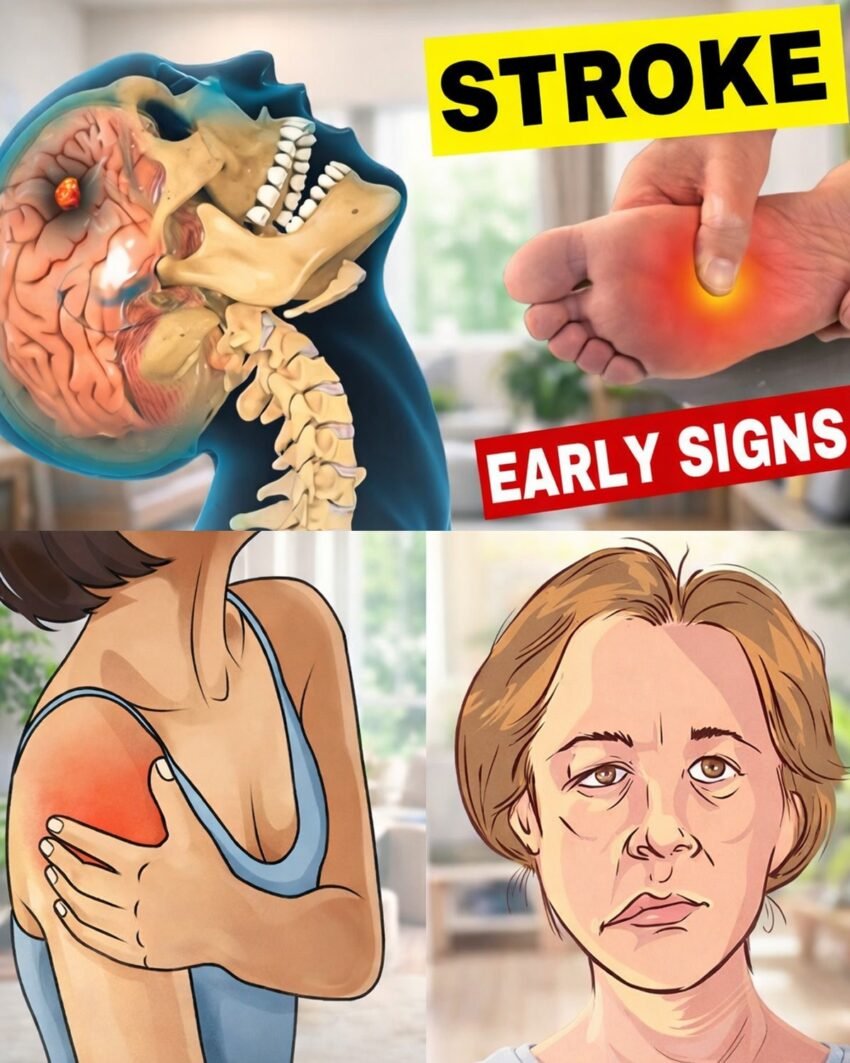
Below is a clear, evidence-based breakdown of possible warning signs and practical prevention tips.
⚠️ 8 Possible Warning Signs Before a Stroke
(These can be subtle and not everyone experiences them)
1. Sudden numbness or weakness
- Especially on one side of the face, arm, or leg
2. Brief vision problems
- Blurry vision, double vision, or temporary vision loss
3. Unexplained dizziness or balance issues
- Feeling unsteady while walking
4. Frequent severe headaches
- Especially “worst headache of your life” or unusual patterns
5. Trouble speaking or understanding
- Slurred speech or confusion
6. Tingling or weakness spells (transient episodes)
- Could indicate mini-strokes (TIAs)
7. Memory or concentration issues
- Sudden confusion or difficulty focusing
8. Sudden fatigue or feeling “off”
- Unexplained exhaustion or body heaviness
👉 These may signal mini-strokes (Transient Ischemic Attacks, TIAs), which are strong warning signs of future stroke risk.
🧠 9 Powerful Ways to Reduce Stroke Risk
1. Control blood pressure
High blood pressure is the #1 risk factor for stroke.
2. Eat a heart-healthy diet
Focus on fruits, vegetables, whole grains, and healthy fats.
3. Reduce salt and processed foods
Helps prevent hypertension.
4. Exercise regularly
At least 30 minutes most days improves blood flow.
5. Quit smoking
Smoking severely damages blood vessels.
6. Limit alcohol intake
Excess alcohol increases stroke risk.
7. Manage diabetes
Keep blood sugar stable if diabetic or prediabetic.
8. Maintain healthy weight
Reduces strain on heart and arteries.
9. Manage stress and sleep
Chronic stress and poor sleep increase vascular risk.
🚨 When to Seek Emergency Help
Use the FAST rule for Stroke:
- Face drooping
- Arm weakness
- Speech difficulty
- Time to call emergency services
Even if symptoms disappear quickly, seek immediate care.
⚠️ Important Note
These warning signs are not a diagnosis. Many conditions can mimic stroke symptoms (like migraines, nerve issues, or anxiety). But because stroke is time-sensitive, it’s always safer to treat symptoms seriously.
If you want, I can also give you:
- A stroke risk self-check questionnaire
- A heart-healthy meal plan to reduce stroke risk
- Or a list of silent stroke symptoms often missed in daily life