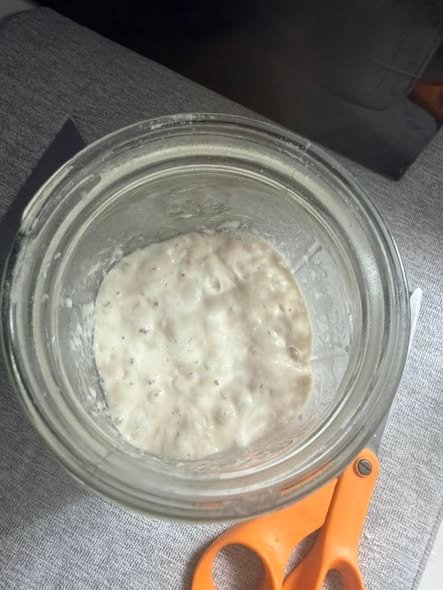
Since you mentioned it’s been ~12 hours after feeding, here’s how to judge it properly:
🫙 What “good” starter looks like at peak
A healthy, ready sourdough starter usually shows:
- 📈 Noticeable rise (often doubles in size, sometimes more)
- 🫧 Small bubbles throughout (not just a few large ones on top)
- 🍦 Domed top (not collapsed or runny)
- 👃 Smell: pleasantly tangy, yogurt-like or slightly fruity (not rotten or overly harsh)
🧠 Why you might not see many bubbles yet
This is very common for newer starters:
- 🧒 Starter is still young (less yeast population built up yet)
- 🌡️ Room temperature may be cool (slows fermentation)
- 🌾 Flour type matters (white flour shows fewer visible bubbles than whole grain)
- ⏱️ It may have already peaked and started to fall (bubbles shrink after peak)
🔍 Key question: did it rise and fall?
Try checking:
- Put a rubber band or mark the jar next time
- If it rose and then deflated → it did ferment properly
- If it barely moved → it needs more time/more feed strength
⚠️ Is it safe to use?
It is likely safe if ALL of these are true:
- No mold (fuzzy spots, unusual colors)
- Smells pleasantly sour, not rotten or cheesy in a bad way
- It rose at least somewhat after feeding
But:
👉 If you’re trying to bake bread, it may not be strong enough yet unless it reliably doubles in 4–8 hours.
🧪 Simple readiness test
Take a spoonful and drop it in water:
- 🌊 Floats = ready to bake with
- 🪨 Sinks = needs more time/feeding cycles
🧭 What I suspect from your description
- “Definitely grew but not very bubbly” = normal early starter behavior
- This sounds like a developing starter, not fully mature yet
👍 What to do next
- Keep feeding it regularly (once or twice daily)
- Use a 1:1:1 ratio (starter:water:flour by weight if possible)
- Keep it warm (around 24–27°C is ideal)
If you want, tell me:
- how old your starter is
- what flour you’re using
- and your room temperature
I can tell you pretty accurately if it’s close to baking-ready or still building strength.